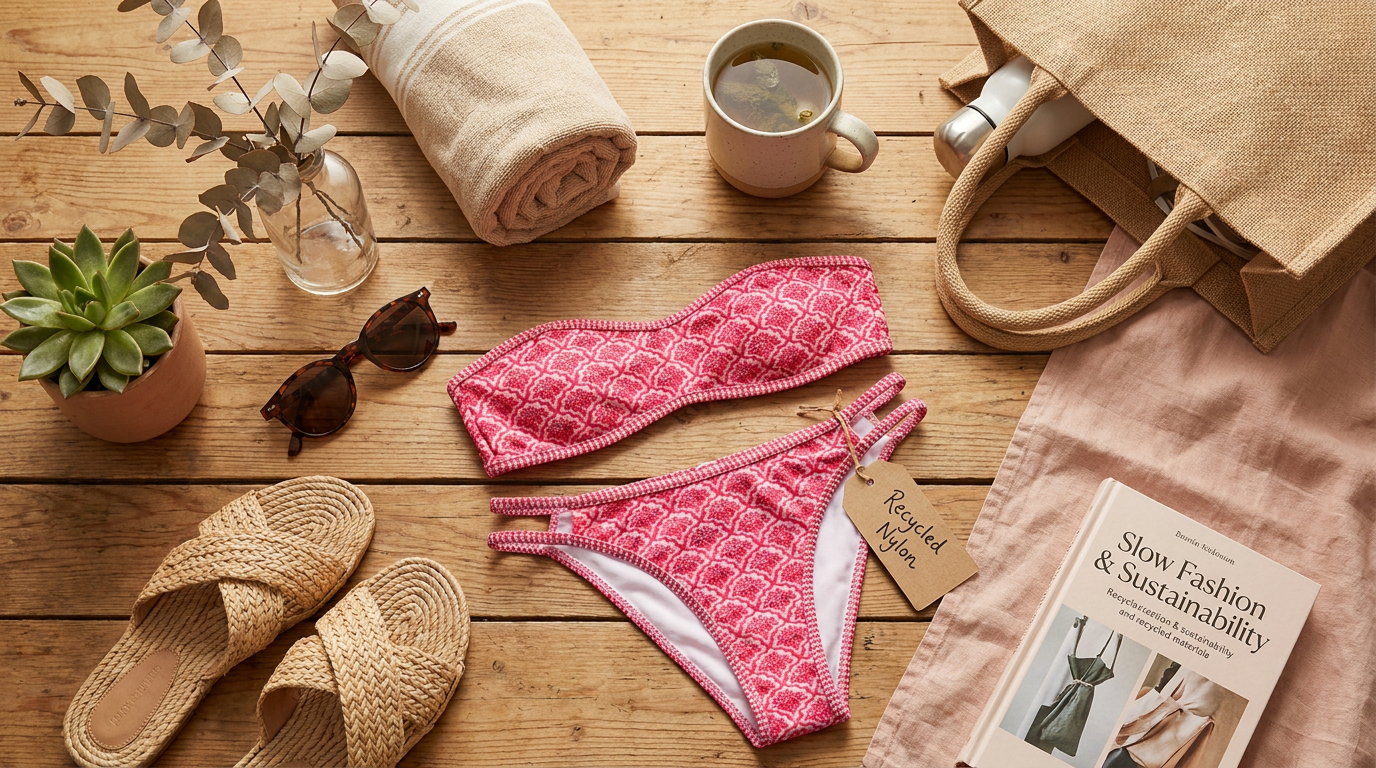
The Sustainability Flaw in Your Floral Print Bikini
 Maya ChenContributing Editor
The vibrant floral print on your 'sustainable' bikini is likely the most unsustainable thing about it, undermining any eco-friendly fabric claims. The conventional wisdom says that choosing swimwear made from recycled materials like Econyl or Repreve is the peak of conscious consumerism. This view, however, ignores a critical failure point: the print itself. The focus on recycled fabric has created a blind spot for the environmental and lifecycle costs of achieving those complex, multi-color botanical designs.
The Chemical Footprint of a 'Bouquet' Print
Here's the part nobody talks about: the dyeing and printing process. Creating vibrant, detailed floral patterns requires a significant amount of water, energy, and chemicals, even with modern digital printing methods. Textile dyeing is the second-largest polluter of water globally, with the fashion industry generating about 20% of the world's wastewater, according to the World Bank. The intricate color-mixing needed for a photorealistic flower print carries a chemical footprint that can easily outweigh the benefits of using a recycled base textile. A brand's claim of 'sustainability' is incomplete if it doesn't account for the impact of its dyes and printing runoff.
Fading Florals and Premature Replacement

Photo by Vika Glitter on Pexels
High-performance recycled swimwear fabric is engineered to resist degradation from chlorine, salt, and UV exposure. The prints applied to them are not. Vibrant, surface-level digital prints are often the first element to fail, fading into a muted, worn-out version of the original design after just a season of use. This aesthetic failure encourages premature replacement, sending a still-functional garment to the landfill. This cycle of planned obsolescence directly undermines the primary goal of sustainable design: longevity. Learning how to style a floral print bikini set to maximize its visual life is a temporary fix for a fundamental product flaw.
True Sustainability is Longevity, Not Just Material
Run the math: a swimsuit that lasts for five seasons is inherently more sustainable than one that is discarded after two, regardless of its recycled content. The most sustainable choice is the one that maximizes use and minimizes replacement. This is where solid-color and solution-dyed swimwear excel. Solution dyeing integrates pigment into the fiber during manufacturing, creating a color that is part of the material itself. It cannot fade, chip, or wash out. This method uses drastically less water and results in a garment whose colorfastness matches the durability of its fabric. A comprehensive sustainable floral print bikini set framework must prioritize longevity above all else. I'll change my mind when print technology can guarantee colorfastness that lasts as long as the recycled polyamide it's printed on.
What makes a Floral Print Bikini Set unsustainable?

Photo by Duren Williams on Pexels
The primary sustainability issue with a floral print bikini is the print itself. The chemical-intensive printing process has a large water and pollution footprint. Furthermore, these vibrant prints often fade long before the durable recycled fabric wears out, encouraging consumers to replace the entire garment prematurely. This shortens the product's lifespan, which is the opposite of sustainable practice. Understanding what makes a Floral Print Bikini Set sustainable requires looking beyond just the fabric tag.
Is a solid-color bikini more sustainable than a floral one?
Yes, in most cases. A solid-color suit, particularly one that is solution-dyed, offers superior longevity. Because the color is integrated into the fiber itself, it won't fade from sun or chlorine exposure. This ensures the aesthetic life of the bikini matches the physical durability of its high-performance fabric, maximizing its use and delaying replacement. A longer lifespan is the most critical factor in reducing a garment's overall environmental impact.