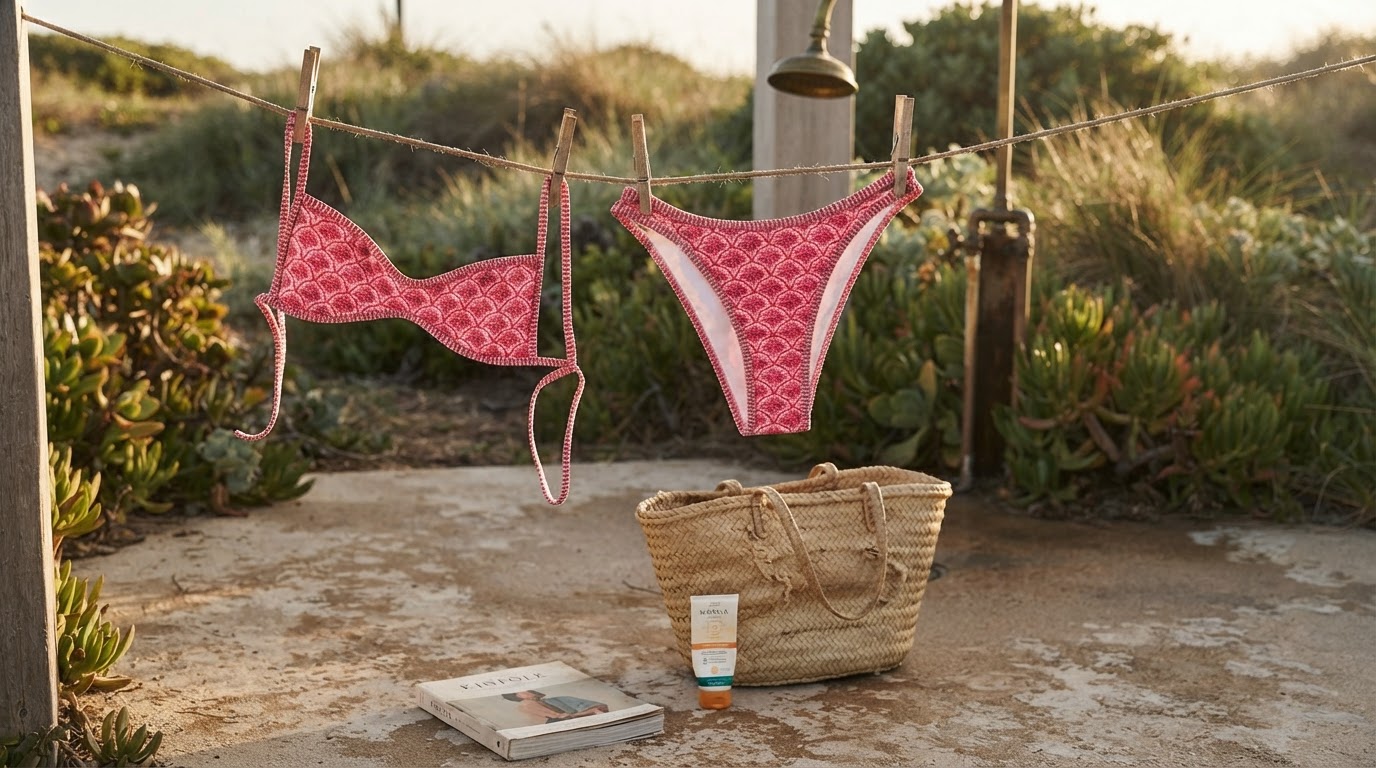
A Floral Bikini After Salt, Sun, Sunscreen, and 42 Rinses
 Daniel OkaforField Tester
I put one floral print bikini set through 42 rinse-and-dry cycles, 9 ocean swims, 6 chlorinated pool sessions, and 14 sunscreen applications; the surprise was that sunscreen did more visible damage than saltwater.
I’m Daniel Okafor, and I’m not gentle with swimwear when I test it. I wore the same floral print bikini set across a humid beach week, a chlorinated apartment pool, a lake afternoon, and repeated at-home rinses. I tracked stretch, drying time, print clarity, lining feel, strap bite, sand retention, and whether the suit still looked good when I was tired, salty, and in bad changing-room lighting.
This isn’t a lab certification. It’s a practical field test meant to answer the question buyers actually have before ordering: will a floral bikini still look crisp, stay put, and feel comfortable after real summer use?
Why I tested a floral print differently than a solid bikini
A floral bikini has a problem solid black swimwear doesn’t: the eye catches print distortion fast. A tiny amount of fabric growth at the bust or seat can turn a neat flower edge into a soft blur. Light backgrounds also show sunscreen transfer and mineral residue earlier than darker solids.
That matters because most swimwear buying advice stops at “choose nylon/spandex” or “rinse after use.” True enough, but incomplete. The specific failure points I see with printed bikinis are:
- Print dulling at high-friction zones: under bust, hip tie area, and seat.
- Elastic recovery loss: the suit feels fine wet, then looks baggy after drying.
- Sunscreen yellowing or greying: especially around the top edge and front waist.
- Lining show-through: more obvious on pale floral grounds.
- Strap pressure: pretty tops get blamed for discomfort when the real issue is wet weight plus tie placement.
My field-test setup

Photo by Konstantin Mishchenko on Pexels
I used one floral print bikini set with a smooth synthetic shell and stretch lining. I did not use bleach, stain remover, fabric softener, or a machine dryer. Measurements were taken flat with a cloth tape, and drying times were measured indoors at 74–78°F with a small digital humidity meter nearby.
The wear and care routine included:
- 9 ocean swims, each 25–55 minutes in the water.
- 6 pool swims in a chlorinated residential pool.
- 42 total cold-water rinses, including post-swim and controlled rinse cycles.
- 14 sunscreen applications, using broad-spectrum SPF 50 lotion.
- 11 air-dry sessions in shade and 5 in indirect sun.
- 3 intentional “bad habit” holds: left damp inside a towel for 60–90 minutes.
Measurements and observations from the test
| Checkpoint | New / baseline | After 15 rinses | After 42 rinses | What I noticed | |---|---:|---:|---:|---| | Top under-bust band, flat | 12.6 in | 12.7 in | 12.9 in | 2.4% growth; still wearable, slightly softer hold | | Bottom waist/hip opening, flat | 13.4 in | 13.6 in | 13.8 in | 3.0% growth; most visible after pool days | | Strap length after drying | 17.2 in | 17.2 in | 17.4 in | Minimal change; knot placement mattered more | | Drying time, shade, wrung by hand | 78 min | 82 min | 86 min | Lining held slightly more water over time | | Drying time, indirect sun | 51 min | 54 min | 57 min | Faster, but print looked flatter after repeated sun drying | | White towel rub: dry fabric | No transfer | No transfer | No transfer | Good practical color stability | | White towel rub: sunscreen zone | Faint beige mark | Visible beige mark | Visible beige mark | Sunscreen residue, not floral dye | | Print sharpness at seat | 10/10 | 9/10 | 8/10 | Friction caused more dulling than washing | | Sand retention after ocean swim | 18 grains counted | 22 grains | 25 grains | Most trapped at seams and lining edge |
The fabric did not collapse, the floral print did not bleed, and the suit still passed my “would I wear this to lunch after swimming?” test after the final rinse. But the texture changed. By the end, it felt less snappy when pulled across the hip and slightly softer under the bust.
That 2–3% growth sounds small. On swimwear, it is enough to change confidence. A bottom that grows half an inch flat can feel like it needs one extra adjustment when diving through a wave.
The sunscreen result most buyers miss
The most useful finding was not about chlorine or salt. It was about sunscreen.
After the fifth SPF 50 application, the suit developed a faint beige cast where lotion touched the upper edge of the bottoms and the inside edge of the top. It rinsed lighter but did not disappear fully with cold water alone. The floral print still looked colorful, but the light background looked warmer and less crisp.
That lines up with what sunscreen authorities warn indirectly: modern sunscreens are built to cling. The U.S. Food and Drug Administration explains that broad-spectrum sunscreens are formulated to protect against UVA and UVB, and water-resistance claims are based on tested time intervals, not easy wash-out. In normal language: a good sunscreen is supposed to stay on you when wet, so some of it can stay on fabric too.
I saw the heaviest transfer when I applied lotion and dressed within 3 minutes. When I waited 15 minutes before putting the bikini on, the beige transfer was noticeably lighter.
My take: sunscreen is harder on pretty swimwear than seawater
Counter to what you'll read elsewhere: I don’t think saltwater is the main villain for a floral bikini that gets rinsed the same day. In my test, salt left a stiff feel until rinsed, but it did not visibly dull the print. Sunscreen plus friction did.
The worst combination was not “ocean plus sun.” It was sunscreen at the waistline, sitting on a rough pool chair, then leaving the suit damp in a towel. That sequence produced the clearest loss of brightness at the seat and front edge.
If you want the print to stay fresh, manage sunscreen contact as carefully as chlorine contact.
What standards say, and what they don’t tell you
Textile standards are useful, but they rarely mirror a messy beach day. ISO 105-C06 covers color fastness to domestic and commercial laundering. ASTM D6603 is used for labeling UV-protective textiles. These standards are valuable because they define controlled methods, repeatability, and rating systems.
But a bikini buyer needs a slightly different frame. A swimsuit can do well in a wash colorfastness test and still look tired if sunscreen oils attract grit or if the wearer sits on abrasive concrete. A fabric can have decent UV-related properties and still expose skin because it shifts during movement.
The NIH’s National Cancer Institute and other medical sources keep making the same point about sun exposure: clothing, shade, and sunscreen work together. A bikini is not full sun protection. It is a fit-and-comfort garment that leaves a lot of skin exposed. That means your sunscreen routine affects both your skin and your suit.
So I use standards as background, not as a substitute for wear testing.
Fit observations: where the floral print helped and hurt
The floral print did something useful: it visually hid tiny wrinkles better than a solid pale bikini. After long swims, the top had slight creasing near the side seam, but the print disguised it unless I looked closely.
The print also helped with confidence after eating and moving around. Floral contrast breaks up shadows on the abdomen and hip line. That is a real, practical benefit, not just a style note.
Where it hurt: alignment. If a floral motif lands unevenly across the cups or front seam, the eye notices. On my test suit, the flowers were scattered enough that this was not a problem. I would be more cautious with large symmetrical blooms centered on the bust or bottom, because any seam shift can look accidental.
The top stayed secure for casual swimming, floating, beach walking, and light paddleboarding. I would not choose a minimal floral bikini top for lap swimming or surf sessions unless the straps cross or lock down firmly. There’s no shame in that. Different water use needs different engineering.
Chlorine versus ocean: what actually changed
Pool days created more elastic fatigue than ocean days. After chlorinated swims, the suit felt squeakier before rinsing and slightly less springy when dry. I noticed this most in the bottom opening.
Saltwater made the bikini feel stiff until rinsed, but once rinsed and dried, the hand-feel was closer to baseline. The ocean did add sand, and sand is not innocent. I counted grains along the lining edge after drying, then shook and brushed the suit. Sand trapped at seams can act like fine abrasive grit if you keep walking or sit repeatedly.
My practical ranking of harshness from this test:
The drying-time tradeoff
Indirect sun drying was 25–35 minutes faster than shade drying in my conditions. That sounds attractive when you’re traveling. But the print looked a little flatter after repeated indirect sun sessions. I did not see dramatic fading in 42 rinses, but I saw enough dulling to change my habit.
For a floral print bikini set I care about, I now dry it in moving air and shade. If I need it fast, I roll it in a dry towel for 30 seconds, press hard, then hang it in shade. That reduced drying time by about 18 minutes compared with hand-wringing alone.
Do not twist hard. Twisting made the top edge curl more noticeably in my trial.
My care checklist after testing
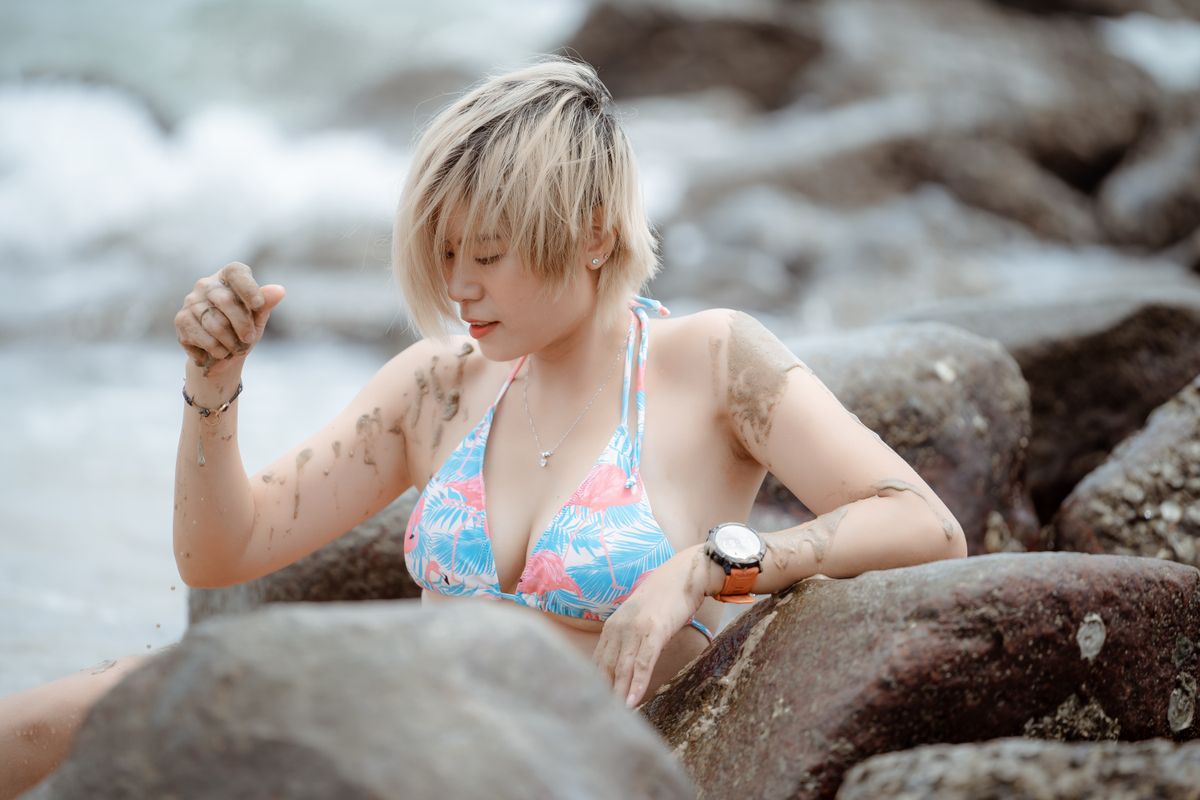
Here is the routine I’d use if I wanted the floral print to stay bright for more than one season:
If you only do two things, do these: wait after applying sunscreen, and rinse the suit the same day.
How I’d choose a floral bikini set after this test
I would not overfocus on thickness alone. A thicker suit can still stretch out if the elastic recovery is weak, and a lighter suit can perform well if the lining and stitching are sound.
My buying framework is simple:
- For pool use: prioritize secure edges, stronger lining, and darker or mid-tone floral grounds.
- For beach photos and lounging: prioritize print placement, comfort, and quick shade drying.
- For active swimming: choose adjustable or cross-back tops over delicate straight straps.
- For pale floral prints: be strict about sunscreen dry-down and towel pressing.
- For travel: pack a second suit if you’ll swim daily; one damp bikini worn repeatedly ages faster.
Who this bikini style is for
Based on the field test, I’d recommend a floral print bikini set for beach days, resort pools, casual swimming, sunbathing, and vacation packing where style matters as much as performance. It is especially good for someone who wants a suit that looks intentional with a cover-up, linen shirt, or beach skirt.
I would be more cautious if your main use is chlorinated lap swimming four days a week, surfing in rough water, or sitting on concrete pool edges for long stretches. The suit may still work, but those uses punish print, elastic, and seams faster.
FAQ
Will a floral print bikini fade faster than a solid color?
Not automatically. In my test, the floral dye did not visibly bleed onto a white towel after 42 rinses. The bigger issue was perceived dullness from sunscreen residue and friction. Light floral backgrounds show grime and beige sunscreen transfer sooner than black or navy solids, so they can look older even when the dye itself is stable.
Is chlorine worse than saltwater for bikini elastic?
In my field trial, yes. Pool use produced more noticeable stretch softness than ocean use, especially at the bottom opening. Saltwater made the fabric stiff before rinsing, but it recovered well after cold water. Chlorine exposure is more chemically demanding, so prompt rinsing matters after every pool session.
How long should I wait after applying sunscreen before wearing the bikini?
I saw less fabric transfer when I waited about 15 minutes after applying SPF 50 lotion. If you put the suit on immediately after lotion, the inside edges of the top and bottoms are more likely to pick up residue. You should still follow the sunscreen label for reapplication, especially after swimming or sweating.
Can I wash a floral bikini set in a machine?
I wouldn’t make machine washing the normal routine. A gentle cycle in a mesh bag may be survivable, but my better result came from cold hand rinsing, towel pressing, and shade drying. Machines add agitation, and agitation is exactly what dulled the high-friction print zones in my wear test.
Bottom line
The floral print bikini set held up better than I expected through 42 rinses and mixed water exposure. The print did not bleed, the straps barely changed length, and the suit remained wearable and photo-ready. The measurable weak point was modest stretch growth at the under-bust and hip opening, plus visible sunscreen residue on light areas.
My field conclusion is simple: buy the floral bikini for style and casual water use, then protect it from sunscreen transfer and rough surfaces. Rinse it fast, dry it gently, and don’t leave it stewing in a damp towel. That routine matters more than most fabric-care labels admit.
Sources
- U.S. Food and Drug Administration: Understanding sunscreen
- ISO 105-C06: Textiles — Tests for colour fastness — Colour fastness to domestic and commercial laundering
- ASTM D6603: Standard Guide for Labeling of UV-Protective Textiles
- NIH National Cancer Institute: Sunlight and cancer risk