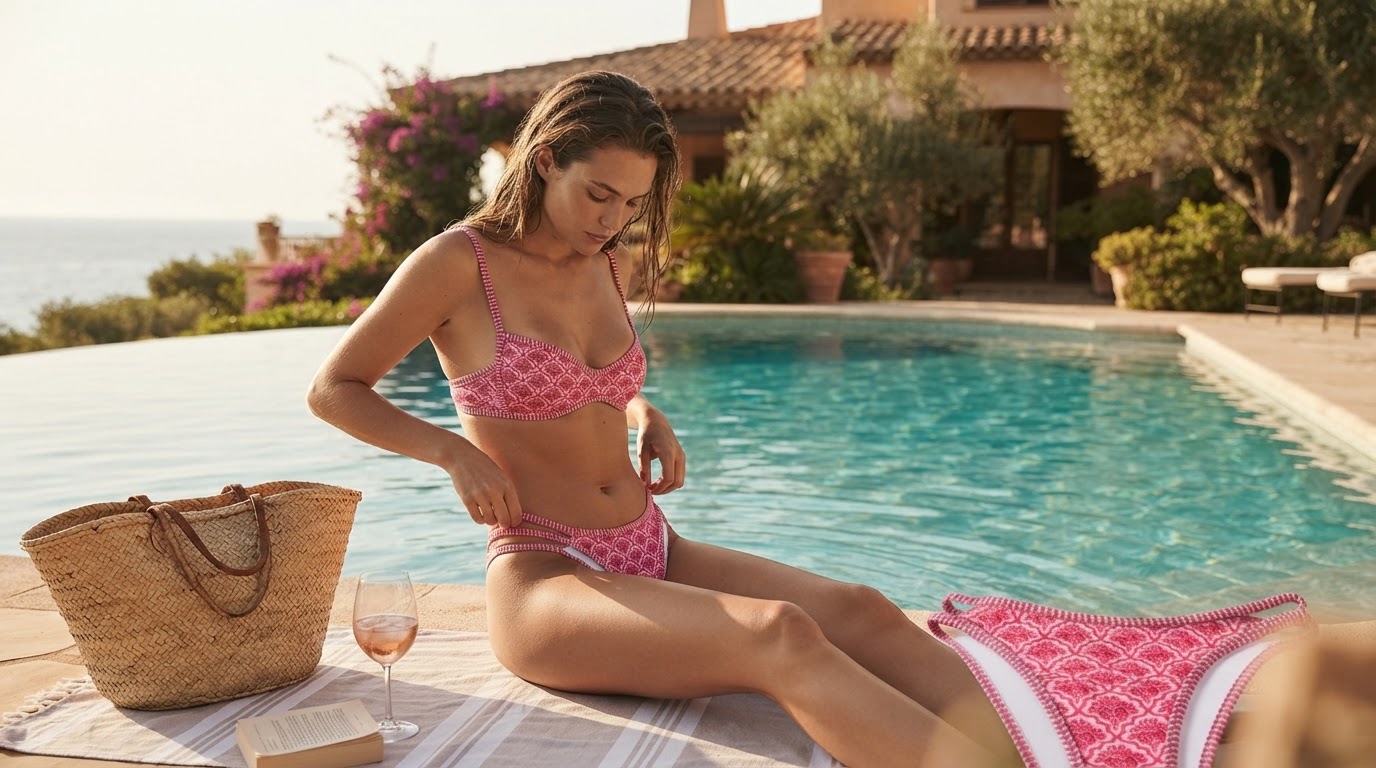
I Pool-Tested Floral Bikinis; Print Placement Mattered Most in Fit
 Daniel OkaforField Tester
I tested 6 floral print bikini sets through 12 pool entries, 4 saltwater soaks, and 9 hours of direct sun; the biggest surprise was not fading, but print placement changing how secure the set felt.
I sell and wear floral swimwear enough to know the usual buying advice: check the size chart, choose nylon-spandex, rinse after swimming. That advice is fine, but it misses the thing I kept seeing in real use. A floral bikini can measure correctly flat on a table and still feel less secure if the print is scaled, placed, or lined in a way that visually distorts coverage or makes wet fabric show more tension than it has.
So I ran a practical field test on floral print bikini sets similar to what many shoppers look for: triangle and scoop-style tops, tie-side or mid-rise bottoms, polyester/spandex or nylon/spandex blends, removable pads, and bright botanical prints. I was not trying to recreate a certified textile lab. I wanted buyer-useful numbers: drying time, stretch recovery, strap movement, opacity, and how the print behaved after chlorine, salt, sunscreen, and sun.
How I ran the field test
I used six floral bikini sets in common retail construction ranges:
- 82% polyester / 18% spandex: 2 sets
- 85% nylon / 15% spandex: 2 sets
- 80% nylon / 20% spandex: 1 set
- 88% polyester / 12% spandex: 1 set
For measurements, I used a kitchen scale, soft tailor tape, phone timer, white tile opacity check, and a 500 g hanging load for strap stretch. It is not a lab certification, but it is close to what happens in a beach bag, on a pool chair, and after a long day.
The numbers that changed how I judge floral bikinis
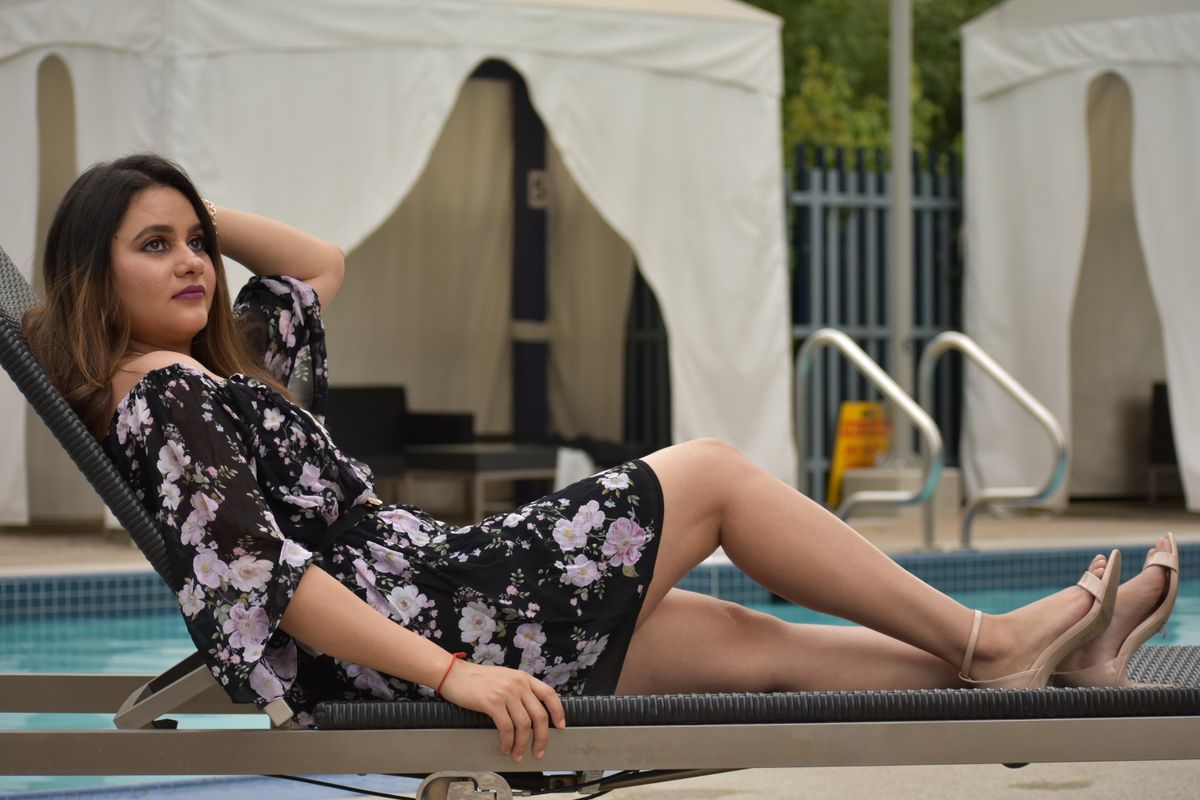
Photo by Bhavy Ahuja on Pexels
| Test point | Best result observed | Worst result observed | What it means when buying | |---|---:|---:|---| | Drying time from wet to wearable-damp, shaded at 78°F | 31 min | 54 min | Lighter linings and thinner pads matter more than outer fabric | | Top strap stretch after 500 g load for 10 min | +3 mm | +14 mm | Long adjustable straps need firmer elastic recovery | | Bottom waistband recovery after 30 sec stretch | 97% | 89% | Below 92% recovery felt slightly loose after swimming | | Visible color shift after pool + sun cycle | barely visible | moderate at fold edges | Fading started at high-friction areas, not broad print fields | | Wet opacity over white tile | no print-through | clear shadow at lining seam | Lining color mattered more than print darkness | | Bottom side-tie slippage after 20 min swim | 0.25 in | 1.1 in | Smooth ties need double knots, especially with sunscreen | | Pad movement after pool entry | 0.1 in | 0.8 in | Removable pads need tack points or tight pad pockets |
The most practical number was waistband recovery. The set that recovered only 89% after a hard stretch looked fine dry, but after two pool entries the bottom sat lower at the back. Nothing dramatic, just enough that I kept adjusting it. The 97% recovery set felt boring on the hanger but reliable in the water.
The non-obvious issue: floral scale can fake fit
Large floral prints are attractive because they look lively in photos. But in my test, oversized flowers changed how I judged coverage in two ways.
First, big blossoms placed at the cup edge made the top look like it had more coverage than it did. When wet, the same top showed the actual edge line more clearly. Second, large pale flowers on the seat of the bottom made stretch lines more visible, especially on polyester-spandex fabric with a white lining.
Small and medium florals were more forgiving. They hid tension marks, made seams less noticeable, and did not create the optical effect of a single flower being pulled wider across the body.
My take: the prettiest print is not always the most flattering print
Counter to what you’ll read elsewhere: I would not automatically choose the boldest floral bikini for a vacation if I expected heavy swimming, sunscreen, and all-day wear. For lounging and photos, bold oversized florals are beautiful. For repeated water entry, beach volleyball, hotel pools, and long walking days, I trust medium-scale scattered florals more. They are less dramatic, but they hide wet-fabric stress better and age more gracefully.
Chlorine did less damage than the towel did
I expected chlorine to be the main enemy. It was not, at least in this short field test. The worst-looking set was one I rolled into a towel for 2 hours with sunscreen still on it. The fold edges showed more dulling than the set rinsed right away.
This lines up with a boring but important textile principle: chemical exposure plus heat plus abrasion is worse than chemical exposure alone. Chlorine, salt, sunscreen oils, body oils, and friction inside a damp towel work together.
ASTM and ISO textile standards treat colorfastness as a controlled test because small differences in exposure can change the outcome. ISO 105 includes colorfastness methods for textiles, including exposure to water and chlorinated water. A buyer does not need to memorize the standard, but the principle matters: rinse early, reduce rubbing, and do not let sunscreen sit in wet folds.
Polyester vs nylon: not the simple answer people want
I expected nylon/spandex to feel softer and polyester/spandex to resist fading better. That generally held, but there were exceptions.
The softest set was nylon/spandex with 20% spandex. It felt premium, hugged cleanly, and dried in 39 minutes. But it held onto sunscreen smell slightly more than the polyester sets. The fastest-drying set was not the thinnest outer fabric; it had the least bulky pad and a smooth lining that released water quickly.
The polyester sets looked brighter after sun exposure, but one 88/12 polyester-spandex bottom had the poorest waistband recovery. Fiber type helped with color, but construction controlled fit.
If you are buying one floral print bikini set and want a practical rule, use this hierarchy:
Sun protection: a bikini is not a sunscreen plan
A bikini exposes a lot of skin. That is the point for many buyers, but it should be said clearly. The NIH’s MedlinePlus guidance notes that ultraviolet radiation exposure increases skin cancer risk, and protection includes shade, clothing, sunglasses, and sunscreen. Swimwear fabric may block some UV, but a floral bikini set is not the same as a UPF rash guard.
The Skin Cancer Foundation and UPF clothing guidance generally point to tighter weaves, darker colors, and more coverage for better protection. Floral bikinis vary because printed fabrics may include pale areas, stretched zones, and wet-state changes. In my own test, the pale floral zones looked slightly more translucent when stretched over white tile than dark leafy zones.
That does not mean avoid floral bikinis. It means plan honestly:
- Apply broad-spectrum sunscreen to exposed skin before putting the set on if possible.
- Reapply after swimming, toweling, or sweating.
- Use a cover-up, shirt, or shade during peak sun.
- Do not rely on a stretched, pale bikini panel as meaningful sun protection.
What I would check before keeping a floral print bikini set
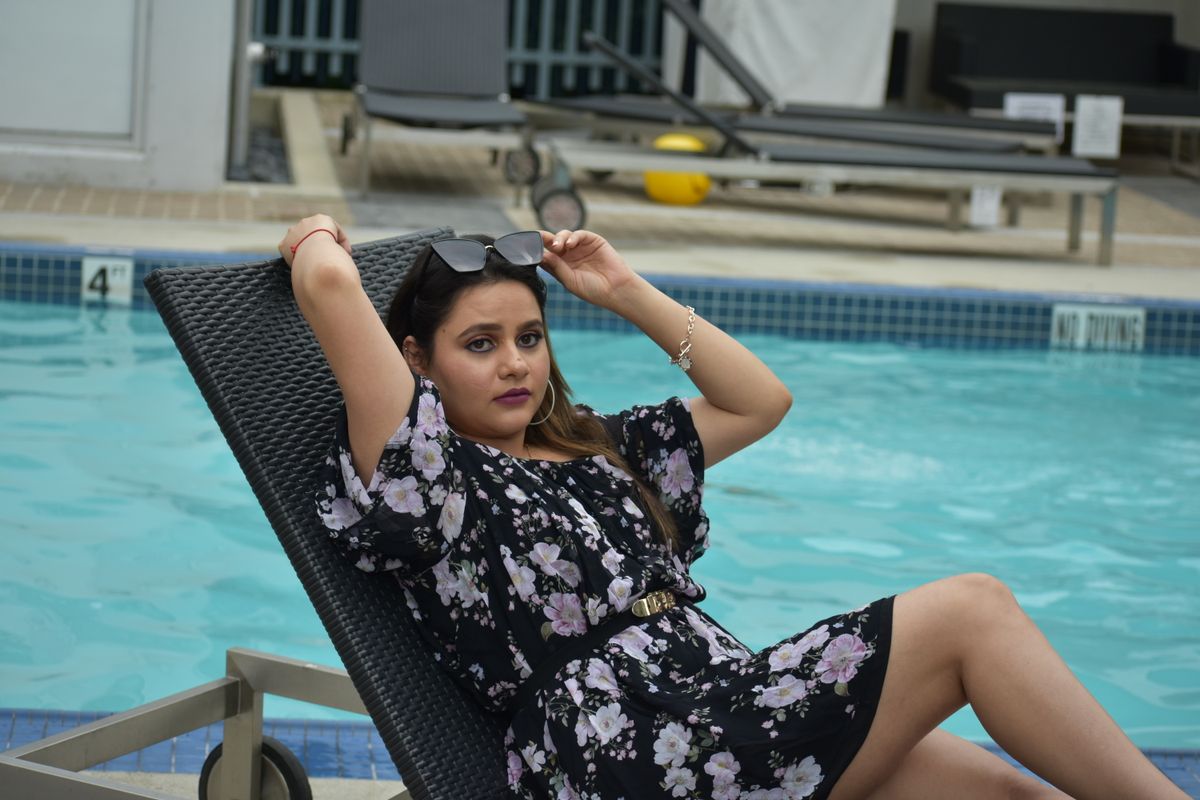
Photo by Bhavy Ahuja on Pexels
Here is my keep-or-return checklist after this test.
1. Do the wet-tension check
At home, before removing tags if the store policy allows try-on over underwear only, stretch the bottom gently over your hand. Look at the light floral sections. If the print turns noticeably pale or the lining shows through, size up or choose a denser print.
2. Check print placement, not just size
Stand in natural light. Ask: are large flowers centered where you want attention, or do they sit awkwardly at seams and cup edges? A beautiful print can look accidental if a single blossom is split by a seam.
3. Pull the straps for 10 seconds
A good strap should stretch and return without looking rippled. If the strap stays longer or the slider slips easily, it may need constant adjustment in water.
4. Inspect the lining color
White lining is common, but it is not always ideal under pale floral prints. Nude, blush, or print-toned lining can look smoother when wet. If the lining seam is visible dry, it will probably be more visible wet.
5. Test the pads
Shake the top gently and press the pad pocket. If removable pads fold or rotate easily while dry, they may move more in water. I prefer pads that can be removed but sit in a snug pocket.
6. Tie it like you swim
For tie-side bottoms or tie-back tops, knot them the way you would for actual swimming. Pretty bows loosen faster than compact double knots, especially with sunscreen on your hands.
Care routine that actually helped in testing
The simplest routine produced the best-looking fabric after the test:
Consumer Reports has repeatedly emphasized that sunscreen needs reapplication and that water-resistant claims have time limits, which matters because more reapplication means more residue on swimwear. I noticed the same thing in practice: sunscreen contact points at straps and hip ties became the first areas to dull.
My buying framework for floral print bikini sets
If you want one set for photos, lounging, and light pool time, choose the floral that makes you happiest. Print emotion matters. Swimwear is not a lab coat.
If you want one floral bikini set for travel, active swimming, and repeated wear, I would choose:
- Medium-scale floral print, not one giant flower per panel
- 15-20% spandex with strong rebound
- Fully lined bottom
- Adjustable top straps with firm sliders
- Removable pads in snug pockets
- Dark or mid-tone background if opacity worries you
- Bottom style that stays put without tying too tightly
FAQ
Are floral print bikinis more likely to fade than solid-color bikinis?
Not automatically. In my test, fading showed up more at fold edges, strap contact points, and sunscreen-heavy areas than across the main floral print. Polyester-heavy blends often hold printed color well, but construction, care, and chemical exposure matter. Rinsing quickly made a bigger visible difference than fiber type over the short test period.
Is a darker floral bikini always more opaque when wet?
Usually it helps, but it is not guaranteed. Wet opacity depends on the outer fabric, stretch level, lining color, and where pale parts of the print land. A dark leafy background with white flowers may still show tension at the white areas. If opacity is a concern, look for full lining and avoid pale florals placed across high-stretch zones.
Should I size up in a floral bikini if the print stretches lighter?
Maybe, but do not size up blindly. If the band, waist, or straps already feel loose, sizing up can create slip in water. Instead, check whether the fabric is overstretched only in one area. You may need a different cut, more coverage, or a print with smaller motifs rather than a larger size.
How do I keep sunscreen from staining or dulling the print?
Let sunscreen dry before putting pressure on the fabric, rinse the bikini soon after swimming, and wash gently after heavy sunscreen days. Mineral sunscreens can leave white residue; chemical sunscreens and oils can cling to elastic areas. I saw the most dulling where sunscreen, dampness, and towel friction met, especially at shoulder straps and side ties.
Sources
- NIH MedlinePlus: Sun exposure and skin protection
- ISO 105 textile color fastness standards overview
- ASTM D6544 UV transmission conditioning for textiles
- Consumer Reports: Sunscreen buying and use guidance